
b&m-PLAST R®
Système de vissage direct optimisé pour plastiques à haute performance
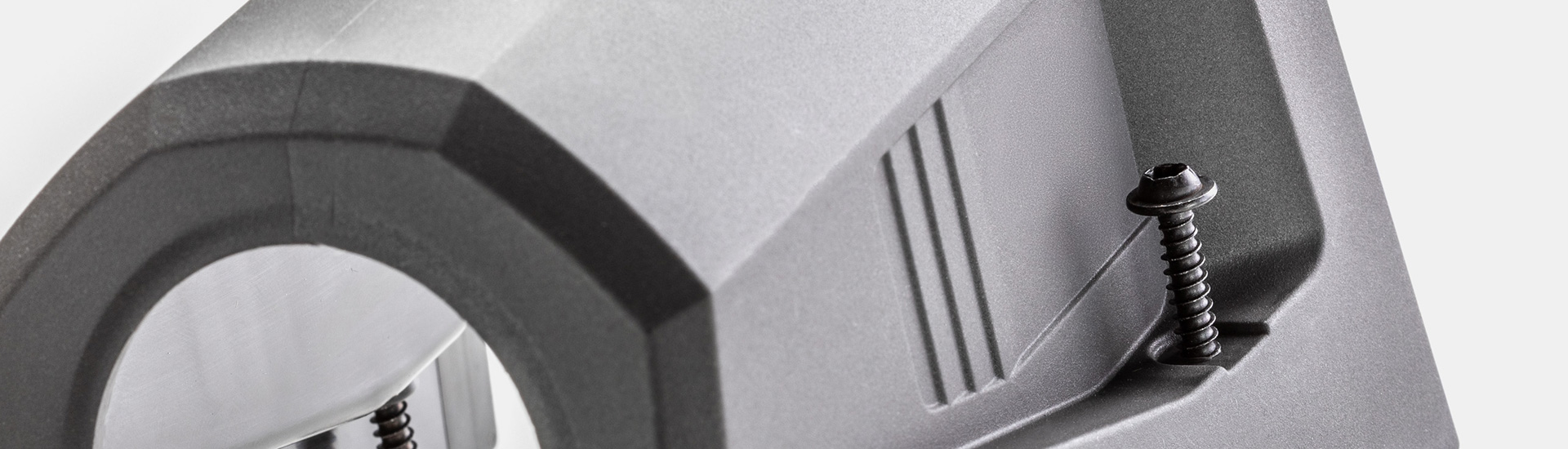
Direct screwing in plastics creates durable screw joints directly in the component, eliminating the need for additional fastening elements. Specifically engineered thread geometries precisely control material flow and enable controlled thread formation. This results in stable clamp loads and consistent installation behavior, supporting repeatable assembly processes. The outcome is an efficient and robust fastening solution for plastic applications.
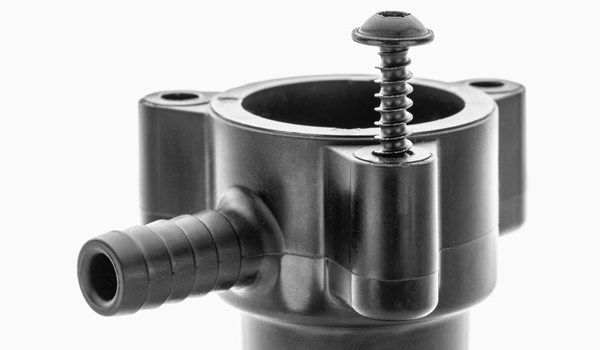
baier & michels develops direct screwing concepts specifically engineered for plastics and tailored to the characteristic properties of thermoplastic and thermoset materials.
Discover the right solution for your application.During installation, the required thread is formed directly in the plastic through thread forming, eliminating the need for any chip-producing machining operations. The fastener precisely displaces the material and forms a load-bearing mating thread that is perfectly matched to the screw geometry. This creates accurately fitting contact surfaces without the manufacturing-related tolerances that can occur with pre-cut internal threads. As a result, this principle enables efficient assembly as well as durable and removable joints.

b&m thread geometries are deliberately designed to differ from conventional screw concepts. Instead of a 60° flank angle, reduced angles of 30° and 25° are used. This design forms the basis of modern direct screwing systems and improves material engagement while achieving a higher fill level at the thread root. At the same time, screw bosses in injection-molded components can be designed with less material, supporting the implementation of thin-walled component structures. The increased overlap between the thread flanks and the plastic material also ensures reliable load transmission.
Reliable fastening directly in plastics – engineered for outstanding performance and maximum process reliability.
Système de vissage direct optimisé pour plastiques à haute performance
Discover our portfolio and identify the optimal solution for your specific application.
Vous êtes actuellement en train de consulter le contenu d'un espace réservé de Facebook. Pour accéder au contenu réel, cliquez sur le bouton ci-dessous. Veuillez noter que ce faisant, des données seront partagées avec des providers tiers.
Plus d'informationsVous êtes actuellement en train de consulter le contenu d'un espace réservé de Instagram. Pour accéder au contenu réel, cliquez sur le bouton ci-dessous. Veuillez noter que ce faisant, des données seront partagées avec des providers tiers.
Plus d'informationsVous êtes actuellement en train de consulter le contenu d'un espace réservé de X. Pour accéder au contenu réel, cliquez sur le bouton ci-dessous. Veuillez noter que ce faisant, des données seront partagées avec des providers tiers.
Plus d'informations